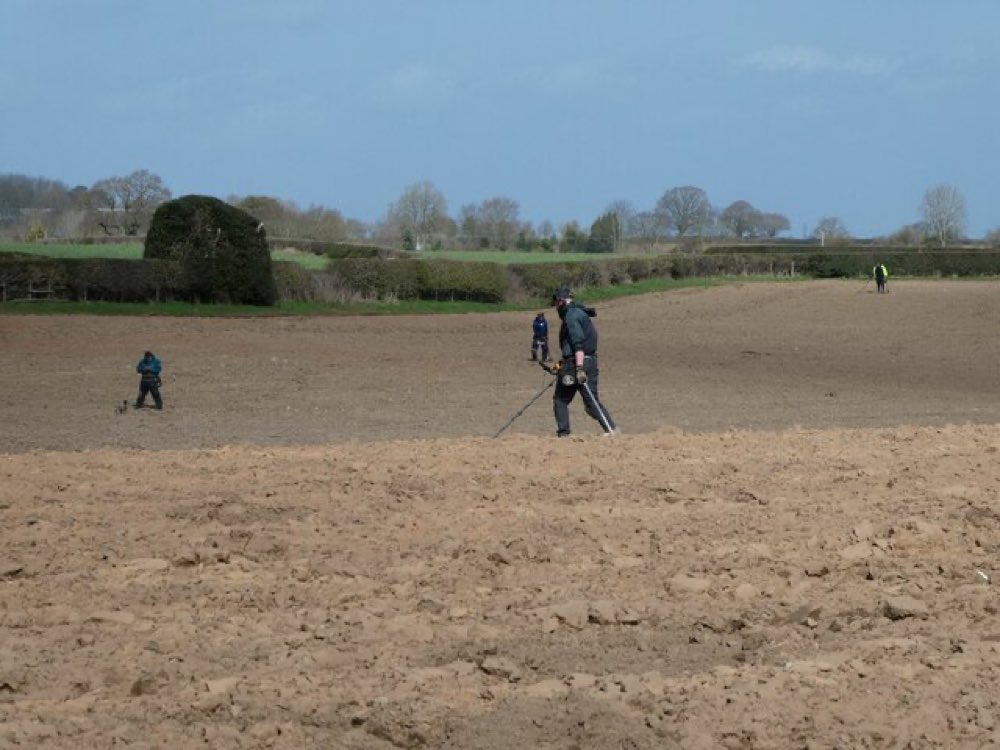
After the detector and a pinpointer, a proper digging tool is the thing that makes the biggest difference to a day’s detecting. UK soil is hard work: heavy clay, flint, stones and roots. A garden trowel will bend, and a garden spade makes big, messy holes that landowners notice.
How we chose: from specifications, current Amazon UK prices and ratings, and what UK detectorists say about digging tools. We haven’t tested every tool ourselves.
The short answer
- Best overall: the CKG Carbon Metal Detecting Shovel (about £64), with a double-serrated blade and a light carbon handle for long days on farmland.
- Best budget spade: the Roughneck Gorilla Micro Shovel (about £16). It isn’t made for detecting, but it’s tough and cheap.
- Best hand digger for parks and gardens: the INCLY double-serrated digger (about £19).
- On the beach, use a sand scoop instead of a spade.
The full comparison is below.
Spade or hand digger?
- Long-handled spades are best for farmland and pasture. You dig standing up, which saves your back over a long day, and they cut through clay and roots easily.
- Hand diggers (trowels) are best for parks, gardens and beaches, where you want a small, neat hole and to carry as little as possible. They’re also cheap enough to keep one as a spare.
Many detectorists end up with one of each.
What makes a good detecting spade
- Serrated edges to cut through turf and roots, so you can cut a neat, hinged plug and fold it back afterwards.
- A strong blade and socket. UK clay and flint bend weak tools, and the joint between blade and handle is usually where they fail.
- Light weight. You’ll carry it all day.
- A step or tread on a long spade, so you can push it in with your foot.
- Blade thickness. 3mm is what a serious spade is built to. Thinner pressed blades flex in clay, and that flex is what eventually splits the socket weld.
Stainless or mild steel?
This choice decides most of the price, and the honest answer depends on your ground rather than your budget.
Mild steel is cheap to replace and takes a beating, but it rusts, and a spade left in the boot after a wet day on clay will show it within a week. Stainless resists that and sheds sticky clay more readily, which matters more than it sounds when every plug comes up with half the field attached.
The premium is consistent across the specialist range. Black Ada sell most of their spades in both: the Invader is £20.95 in mild steel against £45.49 in stainless, the Gladius £34.95 against £62.95, and their Dagger trowel £9.49 against £22.49. You are paying roughly double, or £18 to £28 on the same tool, for the stainless version.
Buy mild steel if you detect mostly on stubble and light loam, keep your kit clean, and would rather put the difference towards a pinpointer. Buy stainless if your permissions are heavy clay, you detect through the winter, or your tools live in the car.
The UK specialist spades
Most of the tools above are bought on Amazon, but the spades UK detectorists actually argue about come from two small specialists and sell through detecting dealers instead. They are worth knowing about before you spend £60 on a general-purpose shovel.
Evolution make the Pro-Cut: a 3mm stainless blade with sharpened serrations on both edges, 250mm long and tapering from 200mm to 115mm wide, on a 25mm tubular shaft with a D-handle. It is 840mm overall, weighs 1,900g, and costs about £73.50. The weight is the thing to notice. At nearly 2kg it is a different proposition from a carbon-shafted shovel by the end of a six-hour day, so it suits people who dig a lot of difficult ground rather than people who cover a lot of it.
Black Ada cover the range more cheaply, from the Invader at £20.95 in mild steel up to the stainless Spartan at £67.95, with extended long-handled versions of most models. Their Big Foot, £60.95 in stainless, is the wide-blade option for lifting larger plugs in pasture.
Those prices are from UK detecting dealers in October 2026 and move around. Stock on the specialist spades is intermittent, which is the main practical argument for the Amazon options below.
The best long-handled spades
Best overall: CKG Carbon Metal Detecting Shovel (about £64)
The CKG has a double-serrated blade for cutting turf and roots and a light carbon handle, so it's easy to carry all day. It's the highest-rated long detecting spade on Amazon UK with a decent number of reviews: 4.6 stars from 199 ratings. A blue version is also available at a similar price.
From a detector brand: Minelab Stainless Pro Spade (about £56)
Minelab's own spade has a stainless steel blade, which won't rust after a day in wet clay, and it's designed specifically for detecting. It has fewer reviews than the CKG (25, averaging 4.6 stars), but it comes from one of the biggest names in the hobby.
Best budget spade: Roughneck Gorilla Micro Shovel (about £16)
Not made for detecting, but the Roughneck is popular with detectorists because it's tough and cheap. It's 69cm long, with a sharp round blade, a reinforced socket and a fibreglass handle. It has no serrations, so it's slower through turf, but at this price it's hard to beat. It's rated 4.7 stars from 135 reviews.
The best hand diggers
Best hand digger: INCLY double-serrated digger (about £19)
A heavy-duty hand digger with serrated edges on both sides and a belt sheath, so it's always to hand. It's the most-reviewed detecting hand digger on Amazon UK, rated 4.7 stars from 625 ratings. It's ideal for parks and gardens, and as a second tool alongside a long spade on farmland.
Compact alternative: Detecting Innovations Mini Spade (about £16)
A short carbon-steel spade from a UK detecting accessories brand, somewhere between a hand digger and a full spade. It's heavy duty and small enough to strap to a bag. It has only a handful of reviews so far (4.5 stars from 17). As an Amazon Associate we earn from qualifying purchases.
Quick comparison
| Tool | Type | Price (approx.) | Serrated | Amazon UK rating |
|---|---|---|---|---|
| CKG Carbon Shovel | Long spade | £64 | Yes, both sides | 4.6 (199) |
| Minelab Stainless Pro Spade | Long spade | £56 | — | 4.6 (25) |
| Roughneck Micro Shovel | Short spade | £16 | No | 4.7 (135) |
| INCLY digger | Hand digger | £19 | Yes, both sides | 4.7 (625) |
| Detecting Innovations Mini Spade | Short spade | £16 | — | 4.5 (17) |
Prices are Amazon UK prices checked in September 2026 and change often.
How to dig a neat hole
- Pinpoint the target with your detector so you know roughly where it is.
- Cut three sides of a square or a horseshoe around it, about 15–20cm across, leaving one side uncut as a hinge.
- Fold the plug back on the hinge, keeping the turf in one piece.
- Find the target with a pinpointer, in the hole or in the plug.
- Put the soil back, fold the plug down and tread it in. Done well, you can hardly see where you dug. Keeping dug rubbish off the ground rather than back in the hole is half of this, which is what a decent finds pouch with a separate rubbish pocket is for.
The NCMD’s code of conduct does not prescribe a digging method, but it does ask you to leave property as you found it and not to leave surfaces that could injure livestock or anyone walking the field. A neatly folded plug is how you meet that, and it is what keeps landowners happy to have you back.
Where a spade is not enough, or not allowed
Permission to detect is not the same as permission to dig, and a few situations change the answer.
Scheduled Monuments, SSSIs and MOD land need consent from the relevant authority on top of the landowner’s permission. The NCMD’s code puts the responsibility on you to establish that from the landowner rather than assume it. Some agri-environment agreements carry their own restrictions on disturbing the soil, and the farmer may not think to mention them.
Growing crops and livestock. A general permission does not automatically extend to a field that has been sown or has stock in it. The code treats both as needing further permission.
Stop digging if you turn up live ammunition, ordnance or human remains. Tell the landowner, call the police or bomb disposal, and keep people away until they arrive. The same applies to a hoard still in the ground: leave it in place, because its context is most of its archaeological value. The NCMD runs a free hoard assistance line on 0800 002 5808.
Frequently asked questions
Can I use a normal garden spade? For your first few trips, yes, but it makes bigger holes and is heavier to carry. A detecting spade soon pays for itself.
Are carbon spades strong enough? Good ones are. They’re lighter than steel, but look for reviews that mention clay and flint.
Can I take a spade to the beach? A sand scoop works much better on the beach. See our beach detecting guide. Check the beach’s rules before you go, too. See can you metal detect on UK beaches.
How much should I spend on a detecting spade? About £16 gets you a tough budget shovel that will do the job for your first season. Dedicated detecting spades with serrated blades cost about £55 to £65, and they’re lighter and cut neater plugs, which matters on permission land.
How long should a metal detecting spade be? Long-handled spades run to around 840mm overall, which lets most people dig standing up instead of stooping. Short spades and hand diggers are 300 to 400mm and are meant for kneeling work in parks and gardens. If you are only buying one tool, buy the long one.
Do I need serrated edges? On turf and rooty pasture, yes. Serrations are what let you cut a clean hinge rather than tear one. On loose arable soil they matter much less, which is why plenty of detectorists get a season out of a plain budget shovel before upgrading.
What is the difference between a detecting spade and a garden spade? Width, mostly. A garden spade blade is roughly 180 to 200mm across for its whole length and is built to turn soil over. A detecting spade tapers to around 115mm and is built to cut a small plug and lift it intact. The taper is also why it pulls out of clay more easily.