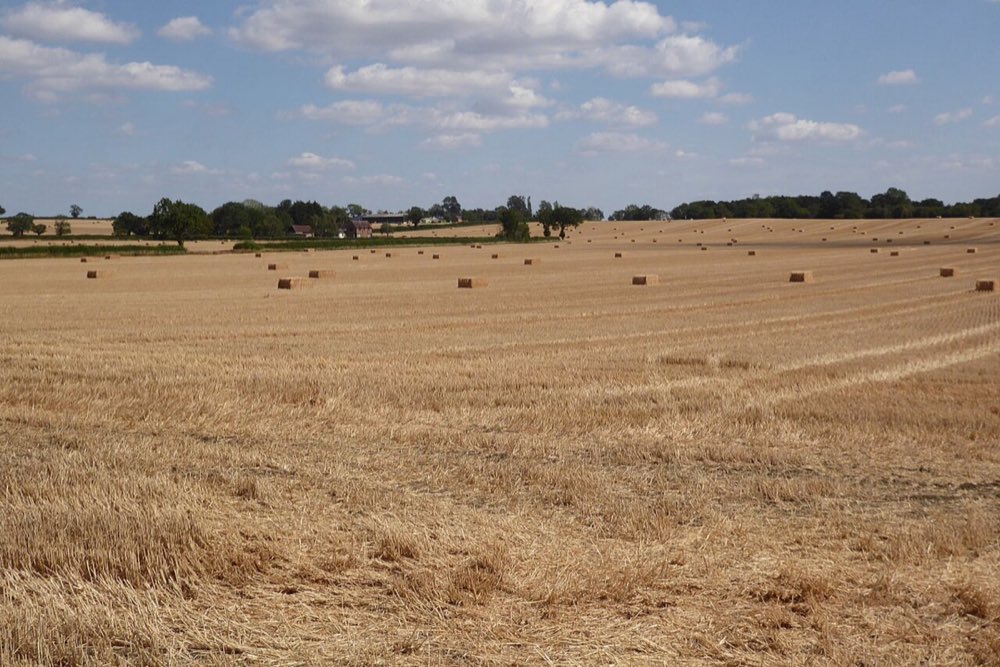
In the UK, when you can detect depends less on the weather than on the farming calendar. Most detecting happens on farmland, and you can only detect a field when there’s no crop in it. That gives the hobby a clear season, and knowing it helps you plan permissions and trips.
The short answer
- Autumn to early spring (roughly September to March) is the main season on farmland, after harvest and before crops grow again.
- Late spring and summer are the quiet months for arable land. Detect on pasture, in parks where permitted, and on beaches instead.
- Winter storms are the best time for beach detecting, because rough seas strip away sand.
Season by season
| Season | Farmland | Beaches |
|---|---|---|
| Autumn (Sep–Nov) | Best time. Stubble and freshly ploughed fields open up after harvest | Good, especially after autumn storms |
| Winter (Dec–Feb) | Good on ploughed and weathered fields, but often waterlogged or frozen | Best. Storms and big tides strip sand |
| Spring (Mar–May) | Short window before crops grow. Pasture all year | Fair |
| Summer (Jun–Aug) | Most arable fields are under crop. Pasture only, with permission | Busy, so good for recent losses on dry sand |
Autumn: the start of the season
Once the harvest is in, farmers often allow detectorists onto stubble fields before they’re cultivated again. Stubble is easy to walk and detect, and fields that have just been ploughed bring new targets up within reach of your coil. This is also the best time to ask for new permissions, because farmers can see that you won’t be damaging a crop. Our guide to getting permission explains how.
Winter: rain helps, frost doesn’t
Winter can be very productive. Rain washes soil off fields that have been ploughed, and damp ground often helps a detector’s signal. But fields can become too wet to walk on without causing damage, and frozen ground makes digging nearly impossible. If a field is waterlogged, stay off it. Churning up a farmer’s field is a quick way to lose a permission. A fully waterproof detector, such as the new Minelab Vanquish models, makes winter detecting much more pleasant.
Our pick for all-weather detecting: Minelab Vanquish 360 (about £259)
The Vanquish 360 is fully waterproof (IP68, submersible to 16ft), so rain, puddles and wet sand are no worry, and it uses Minelab's Multi-IQ multi-frequency technology, which stays stable on wet, mineralised UK ground. It weighs about 1.2kg. See our Vanquish comparison for the rest of the range.
Spring: a short window
Between the end of winter and crops growing, there’s often a short window on fields that have been drilled late or left fallow. After that, you’re mainly limited to pasture. Pasture can be detected all year with permission, but you’ll need to cut neat plugs and replace the turf carefully. Avoid fields where there are ground-nesting birds or young livestock.
Summer: time for the beach and research
With most arable fields under crop, summer is the time to:
- Detect on pasture where you have permission.
- Go to the beach. Busy summer beaches are good for recent losses such as coins and jewellery on the dry sand.
- Go to organised digs and rallies. Some take place on land that’s between crops. See our guide to clubs and rallies.
- Do your research. Old maps, local histories and the Portable Antiquities Scheme database help you find promising land for the autumn.
Kit for cold, wet months
Autumn and winter are the best detecting months, but they’re also cold and muddy. Two cheap items make a real difference:
Waterproof thermal gloves: OriStout winter work gloves (about £10)
You'll spend the day digging in cold, wet soil. These have a fleece lining, a waterproof layer and a grippy latex palm, so you can still hold a pinpointer and pick small finds out of the soil. Rated 4.4 stars from nearly 6,000 Amazon UK reviews.
Knee pads: flintronic 20mm work knee pads (about £11)
Every find means kneeling in a wet field. Strap-on knee pads keep your knees dry and comfortable, and unlike a kneeling mat, you can't leave them behind in the field. Rated 4.2 stars from 1,900 reviews. As an Amazon Associate we earn from qualifying purchases.
Best conditions for beach detecting
Beaches have their own calendar, driven by the weather more than the season:
- After a storm, particularly in winter. Rough seas strip away sand and expose older, heavier finds.
- On big spring tides, which happen around the full and new moon and expose more of the beach at low tide.
- In summer, on the dry sand where people have been sitting, for recent losses.
Most of the foreshore is managed by the Crown Estate, which allows detecting, but check local rules. See our beach detecting guide.
Best time of day
- Early morning on beaches, before other detectorists and after the overnight tide.
- Any time on farmland, but mind the light in winter. Short days mean less detecting time, and you’ll want to leave the field tidy before dark.
Frequently asked questions
Can you metal detect in summer? Yes, but mainly on pasture, beaches, and land where you have permission and there’s no crop. Never detect in a standing crop.
Is rain good for metal detecting? Often, yes. Damp soil can improve signals, and rain washes finds out on ploughed fields. Avoid waterlogged fields, though.
Can you metal detect in winter? Yes. It’s one of the best times, especially on beaches after storms, as long as the ground isn’t frozen or waterlogged.