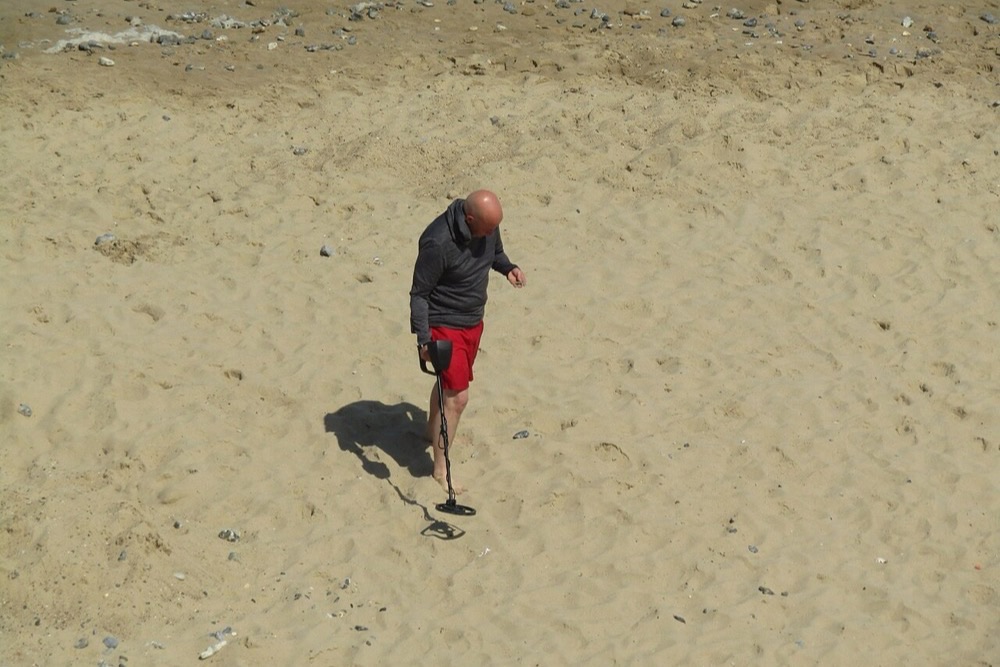
If you detect a beach, comb one, or just come home with a pocketful of nice stones, this question has probably crossed your mind. The short version repeated everywhere is “it is illegal, £1,000 fine.” That is close enough to be useful and wrong enough to be worth unpicking, because the actual law is more specific than the headlines suggest.
The short answer
- It is not a blanket nationwide ban. The restriction bites on stretches of seashore that a coast protection authority has specifically made an order over.
- Where it applies, removing material without a licence is a criminal offence, and the penalty under the Act is level 3 on the standard scale, currently up to £1,000.
- Councils do enforce it, and several have run public warnings about pebbles and shells.
- In practice, assume you should not. Working out whether your particular beach is covered is harder than simply leaving the stones where they are.
What the Coast Protection Act 1949 actually says
The relevant provision is section 18. It is worth reading carefully because the structure is what most summaries miss.
Section 18(1) makes it unlawful to excavate or remove any materials on, under, or forming part of a stretch of seashore to which the section applies. Minerals lying more than fifty feet below the surface are excluded.
That phrase, “to which the section applies,” is the whole point. Section 18 is not automatically live everywhere.
Section 18(3) sets out how it becomes live: a coast protection authority makes an order describing a stretch of seashore. The order can exempt whole classes of operation, either outright or on conditions.
Section 18(4) means the order only takes effect once the Minister confirms it.
Section 18(5) lets the same authority issue licences for things that would otherwise breach subsection (1).
Section 18(7) makes it an offence to remove materials without a licence, or to break a licence condition. Section 18(8) puts a duty on coast protection authorities to enforce the section.
So the accurate statement is this: on a beach covered by a confirmed order, taking material is an offence unless you are licensed or exempt. On a beach not covered by one, section 18 does not apply.
What counts as “materials” and “seashore”
Section 49(1) defines both, and the definitions are wider than people expect.
Materials includes minerals and turf. Pebbles, shingle, sand and stone are plainly caught. Notably, the definition excludes seaweed.
Seashore means the bed and shore of the sea, and also the adjacent land: cliffs, banks, dunes and beaches. So the restriction is not limited to the strip between the tides.
Shells sit in a slightly awkward place. Councils warning the public routinely include them alongside pebbles and sand, and Cumberland Council’s guidance does exactly that, citing the Act. Whether a shell is “materials” within section 49 has not been tested in a way we can point you to, so treat the council position as the practical one.
The penalty, and who enforces
Section 43 sets the general penalty for offences under the Act: on summary conviction, a fine up to level 3 on the standard scale. The figures written into the 1949 text were £10 and £50, long since superseded by the standard scale, which is where the widely quoted £1,000 comes from.
Enforcement sits with coast protection authorities, which in practice means councils. Cumberland Council has warned publicly that taking natural material from a beach is unlawful regardless of quantity, and that it can impose a fine of up to £1,000.
One jurisdictional quirk: section 18(11) says coast protection authorities cannot bring prosecutions for offences under the section in Scotland.
Why councils actually care
This is not bureaucratic fussiness, and understanding the reason makes the rule easier to respect.
Shingle beaches are sea defences. The pebbles absorb wave energy that would otherwise reach the land behind, and a beach that loses material loses that protection. Cumberland Council puts it directly: pebbles and other natural matter act as a defence against coastal erosion and as natural flood defence, and climate change has sharpened the problem.
The same material is habitat. Shingle supports specialised plants and nesting birds, and shells break down into the calcium that other shore life depends on.
One person with a handful of stones changes nothing. The rule exists because beaches receive a great many people with handfuls of stones.
What this means if you detect beaches
Three practical points, because this overlaps directly with beach detecting.
Your finds are a different question. Section 18 is about removing the beach itself: its stone, shingle and sand. A coin, a ring or a lead weight you dig out of it is not beach material, and the rules that matter there are the ones in our guides to metal detecting on beaches and UK metal detecting law.
Backfilling is not just courtesy. If you dig a hole on a shingle beach and leave the spoil scattered above the tideline, you have moved beach material around even if you took nothing home. Fill holes in.
Check the beach, not the county. Permission to detect a beach, whether from the Crown Estate, a council or a private owner, is not the same thing as permission to remove material from it. They are separate questions and the answer to one tells you nothing about the other.
Sea glass, driftwood and fossils
Sea glass is not a natural beach material at all. It is litter that the sea has rounded, which puts it in a different position from shingle, and most councils raising this issue are not aiming at sea glass collectors. We would still avoid taking it in quantity from a beach under an order.
Driftwood is not “materials” under section 49 either, but it can be wreck, which brings in a separate regime and the Receiver of Wreck. A single weathered branch is not what that is for; a crate washed off a ship is.
Fossils are the most nuanced. Many classic British fossil beaches sit inside SSSIs or have their own codes of conduct, and the usual position is that collecting loose material from the foreshore is tolerated or encouraged while hammering the cliff face is not. That is a site-by-site question and a cliff is explicitly within the section 49 definition of seashore.
The same logic governs the other end of the treasure-hunting spectrum. If you have ever wondered whether you can drag a magnet through a canal instead, the answer there turns on ownership too rather than on any criminal statute: see is magnet fishing legal in the UK.
Frequently asked questions
Is it illegal to take pebbles from a UK beach? On a stretch of seashore covered by an order under section 18 of the Coast Protection Act 1949, yes, and the penalty is up to £1,000. It is not an automatic nationwide ban, but councils enforce it where it applies and the practical advice is to leave them.
How much is the fine for taking pebbles from the beach? Up to level 3 on the standard scale, currently £1,000. Cumberland Council has publicly warned of a fine up to that amount.
Can I take shells home? Councils warning the public include shells alongside pebbles and sand. The strict legal position on shells is less clear-cut than for stone, so treat council guidance as the practical answer.
What about seaweed? Section 49(1) specifically excludes seaweed from the definition of materials, so it is not caught by section 18.
Does this apply in Scotland? Section 18 extends there, but section 18(11) prevents coast protection authorities from prosecuting offences under it in Scotland. Other Scottish law may still apply.
Can I take a stone from a beach for my garden? That is exactly the behaviour the warnings target. The quantity does not change the legal position where an order applies.
Does this stop me beachcombing? No. Looking, photographing and recording are unaffected. It is removal of beach material that the section restricts.