The hardest part of metal detecting in the UK isn’t buying a detector. It’s finding land to detect on. Clubs and rallies are the easiest answer: they give you access to land that’s already been arranged, experienced people to learn from, and the insurance landowners expect.
Clubs, organised digs and rallies: what’s the difference?
| Club | Organised dig | Rally | |
|---|---|---|---|
| What it is | A local membership group with regular meetings and shared permissions | A paid day out on land arranged by an organiser | A larger event, often over a weekend, with many detectorists on big areas of farmland |
| Typical cost | An annual subscription | A fee per day | A fee per day or weekend, often with camping |
| Best for | Regular detecting and learning locally | Trying new land without a commitment | A social weekend and a chance at productive land |
Costs vary widely, so check the organiser’s own details before you book.
Why join a club
- Land. Many clubs hold permissions on local farms that members can detect, usually on club days.
- Learning. Experienced members can tell you what a signal means, what a find is, and how to dig neatly. That’s worth more than any upgrade to your detector.
- Credibility with landowners. A farmer is often happier to let a club onto land than a stranger, because the club has rules and a reputation to protect.
- Recording. Many clubs have a relationship with their local Finds Liaison Officer (FLO), who may attend meetings to record finds.
How to find a club near you
- Search for “metal detecting club” plus your town or county. Most clubs have a website or a Facebook group.
- Ask at a local detector shop. They usually know every club in the area.
- Ask your local FLO. They know which clubs record their finds, and that’s a good sign of a well-run club.
Before joining, ask how often they detect, how permissions are shared, and whether members must hold insurance.
Insurance: you’ll almost certainly need it
Most clubs, rallies and many private landowners expect you to hold public liability insurance, which covers you if you damage property or injure someone while detecting.
NCMD membership costs £8 a year and includes public liability insurance of up to £10 million with no excess, which covers commercial rallies, private and group digs and detecting on trips to Europe. Up to three children aged 10–16 can be added free. It's the insurance most UK detectorists use.
Always check the current terms with the provider before you rely on the cover.
What to expect at a rally
- A briefing on the day’s rules, boundaries and where you can’t go.
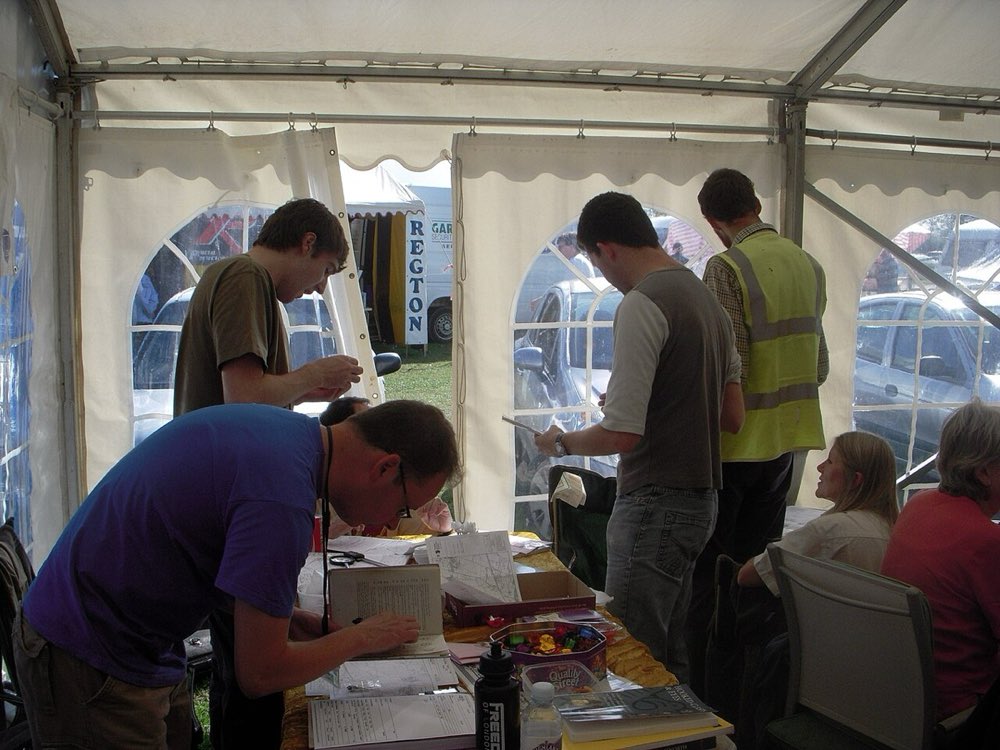
- A finds recording tent, at larger rallies often staffed by FLOs, where you record significant finds.
- An agreement about finds. Read the terms before you pay. Rallies usually have rules on how finds are shared with the landowner, and the law on treasure applies as normal. Anything that may be treasure must be reported within 14 days. See our treasure guide.
- Lots of other detectorists. Give each other space. Swinging your coil right next to someone else is bad manners.
What to bring
- Your detector, spare batteries or a power bank, and headphones.
- A pinpointer, a proper digging tool and a finds pouch.
- Proof of insurance, such as your NCMD card or app.
- Waterproofs, a flask and food. Rally fields rarely have much shelter.
- Small bags and a pen to label finds, plus a phone GPS app to record where each came from.
Our kit list covers the essentials in more detail.
Kit worth having for a rally
Pinpointer: Garrett Pro-Pointer AT (about £117)
Rally fields are full of targets, and a pinpointer means you find each one quickly and dig a smaller hole. The Pro-Pointer AT is the one you'll see in most UK detectorists' holsters, rated 4.7 stars from over 8,600 reviews and waterproof to 6 metres. Our pinpointer guide has cheaper options.
Headphones: Garrett MS-2 (about £35)
With dozens of detectors beeping in one field, headphones are close to essential. The MS-2 has volume control, comfortable pads and a long coiled cable. It has a 1/4-inch plug, so check your detector's socket; many use a smaller 3.5mm socket and need an adapter. Rated 4.4 stars from 479 reviews.
Digging tool and finds pouch
A proper detecting spade cuts the neat plug of soil rally organisers ask for. The CKG carbon detecting shovel (about £64, 4.6 stars from 199 reviews) is light with a serrated blade. A finds bag with pinpointer holster (about £30, 4.4 stars from 1,883 reviews) keeps finds and rubbish in separate pockets. As an Amazon Associate we earn from qualifying purchases.
Rally etiquette
- Fill every hole. Rallies depend on landowners inviting detectorists back.
- Take all your rubbish home, including the scrap metal you dig up.
- Stay within the boundaries, and away from crops, livestock and marked areas.
- Record your finds in the recording tent as asked.
- Leave live ammunition alone. Mark the spot and tell the organisers, who will contact the police.
Frequently asked questions
Do I need to join a club to go metal detecting? No. You can detect anywhere you have permission. But a club is the easiest way for a beginner to get access to land.
Are rallies worth it for beginners? Yes, as a way to learn and meet people. Expect lots of rubbish and some competition, though. Rally fields are often detected heavily.
Do I need insurance to metal detect? It isn’t a legal requirement, but most clubs, rallies and many landowners ask for it, and it’s inexpensive.