There are two very different things people mean by “detecting for gold” in the UK. One is finding gold objects: rings, coins and jewellery lost over the centuries. That happens regularly, all over the country. The other is prospecting for natural gold: nuggets and flakes in rivers and hills. That’s possible in a few parts of the UK, but it’s small-scale, it needs permission, and most of what you’ll find is flakes you can barely see.
Gold objects: the gold most detectorists find
Most of the gold UK detectorists find is jewellery and, occasionally, coins. Beaches are especially good for modern gold rings lost by swimmers. Farmland produces older gold, from medieval rings to the odd gold coin, and very occasionally something of national importance.
Remember the law. Any gold object that may be over 300 years old may be treasure, and treasure must be reported within 14 days. See our guide to what to do if you find treasure. Modern gold jewellery that’s clearly identifiable should be handed in, because keeping it can count as theft by finding.
Detector choice. Gold is often a small, low-conductivity target that gives a signal similar to foil and ring-pulls. Detectorists who want gold dig more of those signals. A multi-frequency detector with good target separation, such as the Minelab Vanquish or the Equinox, is a good all-round choice for finding gold jewellery and coins.
Natural gold: where it’s found in the UK
Natural gold occurs in a handful of areas, most famously parts of Scotland (such as the Leadhills and Wanlockhead area and Kildonan in Sutherland) and Wales (around Dolgellau and the Dolaucothi area). Small amounts also occur in parts of Cornwall, Devon and elsewhere. Most finds are fine flakes recovered by panning river gravels, not nuggets found with a detector.
Who owns natural gold?
This is the part many people don’t know. Naturally occurring gold and silver in the UK are “Mines Royal”, which in most cases belong to the Crown. According to the British Geological Survey, the Crown’s rights are managed by The Crown Estate, and a lease or permission from the Crown doesn’t automatically give you access to the land either.
NatureScot’s position statement puts it simply: to take gold or silver from land or rivers you need the permission of The Crown Estate, except in areas such as the Duke of Sutherland’s and the Duke of Argyll’s estates, where the rights belong to others. In Scotland you must also follow the Scottish Outdoor Access Code and SEPA’s good-practice guidance on gold panning.
In practice: before you pan or prospect, check the current position with The Crown Estate (England, Wales and Northern Ireland) or Crown Estate Scotland, get the landowner's permission, and check whether the river is a protected site. Some well-known panning spots have had their own arrangements over the years, so check locally rather than relying on old forum posts.
Panning: the realistic way to find UK gold
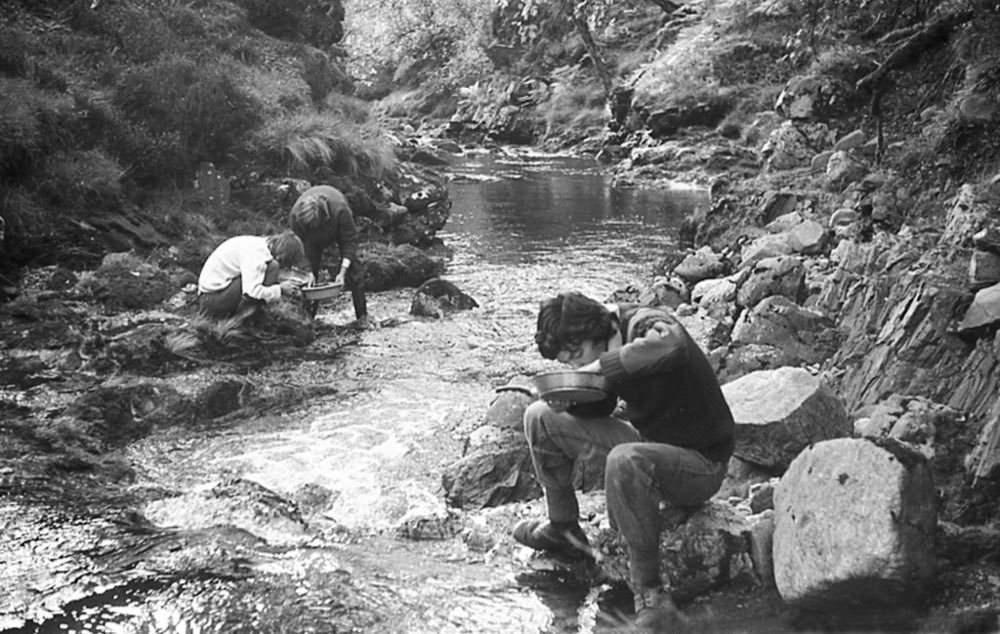
A gold pan is cheap, and panning is how almost all natural UK gold is found. You dig gravel from where gold settles, such as the inside of bends and behind boulders, and wash it in the pan until only the heaviest material is left. A classifier (a sieve that sits on top of the pan) speeds things up by removing stones first.
Be gentle with the river. Don’t dig into the banks, avoid spawning gravels, and fill in what you disturb. Protected rivers and salmon spawning areas need extra care.
Gold detectors
Specialist gold detectors run at high frequencies or use pulse-induction technology to pick up tiny gold in mineralised ground. They’re built for goldfields such as Australia’s, and in the UK they’re mainly useful in the few gold-bearing areas above. For everyday UK detecting, an all-round detector is a much better buy.
Recommended kit
Best starter panning kit: XP Gold Pan Starter Kit (about £31)
A 15-inch pan with a classifier and accessories, from the maker of the XP Deus detectors. It's the easiest way to try panning. Rated 4.5 stars from 76 Amazon UK reviews.
Best complete panning kit: XP Gold Pan Premium Kit (about £57)
Two pans (10-inch and 15-inch), two classifiers and an accessory kit, so you can process gravel faster and clean up fine flakes in the smaller pan. Rated 4.7 stars from 95 reviews. For a cheaper trial, a single 26cm gold pan costs about £12.
Specialist gold detector: Minelab Gold Monster 1000 (about £827)
A fully automatic gold detector running at 45kHz with a small 5-inch waterproof coil, designed to find very small gold in mineralised ground. Only worth considering if you'll prospect in a UK gold area with permission. When we checked, it was sold via Amazon US, so check delivery and returns. Rated 4.3 stars from 59 reviews.
Best all-rounder with a Gold mode: Minelab Equinox 900 (about £1,049)
A multi-frequency detector that handles UK farmland and beaches, and adds a dedicated Gold mode for prospecting. It comes with two waterproof coils (11-inch and 6-inch), and the small coil suits tiny targets. Rated 4.6 stars from 198 reviews. The cheaper Equinox 700 (about £699) has no Gold mode but is excellent for gold jewellery on beaches and fields. As an Amazon Associate we earn from qualifying purchases.
Frequently asked questions
Can you find gold with a metal detector in the UK? Yes, mostly as rings, jewellery and coins. Natural gold nuggets are rare, and most natural gold is found by panning.
Is gold panning legal in the UK? Natural gold belongs to the Crown in most places, so you need the Crown’s permission as well as the landowner’s. Check the current position with The Crown Estate or Crown Estate Scotland before you go.
Where is the best place to find gold in the UK? For natural gold, parts of Scotland and Wales. For gold objects, beaches and farmland where people have lived for centuries.
Do I have to report gold I find? Gold objects that may be over 300 years old may be treasure and must be reported within 14 days.