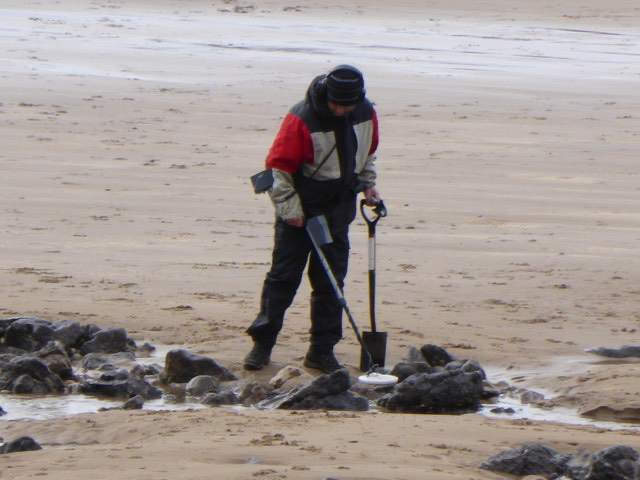
Wales is one of the best places in Britain to detect. It has Roman forts and roads, medieval castles and towns, centuries of farming and miles of beaches from Gower to Anglesey. Museum Wales says detectorists find thousands of objects in Wales every year, and 20 to 30 of them are declared Treasure.
The rules are almost the same as in England, with two differences that matter. Scheduled monuments are protected by Welsh law and managed by Cadw, and finds are recorded through PAS Cymru, run by Amgueddfa Cymru – Museum Wales. This guide explains both in plain English. It isn’t legal advice.
The short version
- Get permission first. All land in Wales belongs to someone, including beaches and parks.
- Never detect on a scheduled monument without written consent from Cadw. It’s a criminal offence, and the landowner can’t give you permission.
- The Treasure Act 1996 applies in Wales. Report possible treasure within 14 days.
- Record your other finds with a Finds Liaison Officer. It’s voluntary, but it’s what responsible detecting means.
- Most National Trust coast is off limits. It cares for 157 miles of Welsh coastline, including many of the best-known beaches.
Wales compared with England and Scotland
| Wales | England | Scotland | |
|---|---|---|---|
| Treasure law | Treasure Act 1996 | Treasure Act 1996 | Treasure Trove (common law) |
| Time limit for treasure | 14 days | 14 days | Report significant finds within one month |
| Who decides if it's treasure | A coroner in Wales, advised by Museum Wales | A coroner, advised by the British Museum | The Crown, via the Treasure Trove Unit |
| Recording other finds | Voluntary, with PAS Cymru | Voluntary, with the PAS | Required if significant |
| Scheduled monuments | Cadw consent needed | Historic England consent needed | Historic Environment Scotland consent needed |
For more detail on each country, see our UK metal detecting law guide and metal detecting in Scotland.
Scheduled monuments and Cadw
This is the rule that catches people out in Wales, because so much of the country is scheduled. Hillforts, Roman forts and camps, burial mounds, sections of Offa’s Dyke and castle sites are all common, and many look like ordinary fields.
Under section 60 of the Historic Environment (Wales) Act 2023, it’s an offence to use a metal detector in a “protected place” without written consent. A protected place includes any scheduled monument, and any monument owned or looked after by the Welsh Ministers or a local council. It’s a separate offence to remove an object of archaeological or historical interest found there without consent.
What that means in practice:
- The landowner can’t give you permission to detect on a scheduled monument. Only Cadw can, through a section 60 consent.
- Cadw rarely says yes. It says consent won’t normally be granted unless the survey is part of a consented archaeological excavation or a wider research project.
- “I didn’t know” only helps if you checked. The law gives a defence if you took all reasonable steps to find out whether the place was protected. So check before you go.
- Check on Cof Cymru, Cadw’s online record of scheduled monuments, which shows where each one is and its boundaries.
Illegal detecting on protected sites, often called nighthawking, is taken seriously. The Welsh Government asks people to report suspicious activity to the police on 101, quoting Operation Heritage Cymru.
Treasure: what to report and when
The Treasure Act 1996 covers England, Wales and Northern Ireland. In broad terms, treasure includes:
- objects at least 300 years old (other than coins) with at least 10% gold or silver
- groups of coins at least 300 years old
- prehistoric base-metal objects found together
- anything found with treasure, such as the pot a hoard was buried in
- since July 2023, some metal objects at least 200 years old of exceptional historical or archaeological importance
If you think you’ve found treasure, you must report it within 14 days of finding it, or of realising it might be treasure. The easiest way is through your local Finds Liaison Officer, who’ll pass it to the coroner. Coroners in Wales decide whether a find is legally treasure, and curators at Amgueddfa Cymru advise them.
If a museum wants to acquire the find, it’s independently valued and a reward is usually shared between the finder and the landowner. Most Welsh treasure finds have gone to local museums across Wales. Our guide to what to do if you find treasure walks through every step.
Recording finds with PAS Cymru
In Wales, the Portable Antiquities Scheme is run by Amgueddfa Cymru – Museum Wales and jointly funded with Cadw and the Welsh Government. Finds Liaison Officers are based at National Museum Cardiff, Swansea Museum and Wrexham County Borough Museum, and they record finds from across Wales. Contact details are on Museum Wales’s PAS page.
Recording finds that aren’t treasure is voluntary, but the Code of Practice for Responsible Metal Detecting asks you to do it, and it’s a big part of why landowners and archaeologists trust detectorists. Records go onto the national PAS database, so your finds help build a picture of Welsh history.
To make recording easy:
- Bag each find separately and write the date and a grid reference or GPS position on the bag.
- Don’t clean anything that might be old. See our guide to cleaning finds.
- Take the finds to your FLO, or arrange a visit to your club.
Where you can detect in Wales
Farmland. Most finds in Wales come from ploughed and pasture fields. You need the landowner’s permission, and a written finds agreement is sensible. See our guide to getting permission and our permission letter template.
Beaches. Wales has superb beach detecting, but who owns the beach matters:
- Crown Estate foreshore. The Crown Estate manages much of the foreshore (the area between high and low tide) in Wales and allows detecting on it without a permit, subject to its terms.
- National Trust beaches. The National Trust cares for 157 miles of the Welsh coast, including places like Rhossili and Three Cliffs on Gower, Barafundle in Pembrokeshire and Porthor on Llŷn. It doesn’t allow detecting, except as part of an approved archaeological project.
- Council beaches. Some Welsh councils allow detecting on their beaches and parks, some require a permit or written permission, and some ban it. Check with the council before you go.
Parks and council land. Treat every park as off limits until the council says otherwise. Ask for any permission in writing.
National parks and forests. Eryri, Bannau Brycheiniog and the Pembrokeshire Coast are national parks, but most of the land in them is still privately owned, so you need the owner’s permission. On Sites of Special Scientific Interest, activities that could damage the site need consent from Natural Resources Wales, which also manages much of the public forest in Wales. Ask before you detect.
For a general guide to land types, see where can you metal detect in the UK.
Kit for Welsh beaches and fields
Welsh beaches are often wet, mineralised and busy with iron, and the fields can be heavy clay. A multi-frequency, waterproof detector copes best with both.
A detector for beaches and fields
The Minelab Vanquish 360 (about £259) is multi-frequency and fully waterproof, so it handles wet salt sand and rainy fields. On a tighter budget, the Vanquish 340 (about £199, 4.3 stars from over 700 reviews) is the UK's most recommended beginner detector, but its control box isn't waterproof. If beaches are your main interest, the Minelab X-Terra Elite is built for them. See our best beach metal detectors.
A sand scoop for the beach
A long-handled stainless steel sand scoop (about £38, 4.5 stars from over 1,000 ratings) lifts a target out of wet sand in one go, where a trowel just fills back in. For dry sand and children, a plastic sifting scoop is lighter and cheaper. See our sand scoop guide.
A pinpointer for neat holes
The Garrett Pro-Pointer AT (about £117, 4.7 stars from over 8,600 reviews) finds targets fast and is waterproof to 6 metres, so it's at home on the beach and in wet fields. See how to use a pinpointer.
Finds bags and a finds box for recording
Your FLO will need to know where each find came from. Write-on grip seal bags cost about £4.50 for 100 (4.6 stars from 516 reviews), and a pocket finds box with scale card (about £12) protects delicate objects and gives you a scale for photos. As an Amazon Associate we earn from qualifying purchases.
Frequently asked questions
Is metal detecting legal in Wales? Yes, with the landowner’s permission and away from scheduled monuments and other protected places. You must report possible treasure within 14 days.
Do I need a licence to metal detect in Wales? No. You need permission to be on the land, and written consent from Cadw for any scheduled monument.
Can I metal detect on Welsh beaches? Often, yes. The Crown Estate allows detecting on the foreshore it manages without a permit. National Trust beaches are off limits, and council beaches have their own rules, so check first.
Who do I report finds to in Wales? Your local Finds Liaison Officer, part of PAS Cymru at Museum Wales. They record ordinary finds and pass possible treasure to the coroner.
What happens if I detect on a scheduled monument? It’s a criminal offence under the Historic Environment (Wales) Act 2023, punishable by a fine, and removing finds from the site is a further offence. Check Cof Cymru before you detect.